
The rejection of Prop Q by Austin voters appears to have had an impact on City Council Members, who heretofore seemed to only feel the need to answer to “progressive” activists. Really, that has been the case since the first 10-1 district Council took office in 2015. So it is an important breakthrough. Only time will tell how long that impact lasts or how far it reaches.
The most important and immediate impact is that the City of Austin has a budget for fiscal year 2025-26. And, that budget does not include the $109 million that the Council, except for Mark Duchen, tried to add on while claiming falsely that the money would go to replacing cuts made by Donald Trump. This also means that Austin residents will not have to pay the additional taxes that would have come with the $109 million addition.
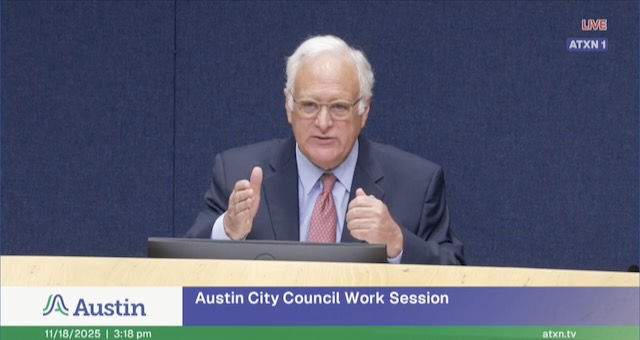
Another important impact of the vote is that Mayor Kirk Watson has come out of his shell. As we have noted here before, Watson has made a habit of not talking at Council meetings, except to the extent it takes to run the meeting. He has seldom — if ever — explained his thinking on critically important votes. He also seldom appeared to be guiding policy made on the dais or embracing his role of being the only member of the Council who represents the entire City. Watson’s actions since Prop Q contrast dramatically with this previous approach. Once again, time will tell if this is a lasting change.
A change seemed evident as soon as election night. Watson quickly issued a concession statement, acknowledged that voters had spoken and then laid out how he thought the budget process should proceed. “The next step is for the Manager to bring Council a budget proposal. This should be done soon. To demonstrate an orderly, disciplined process, the Manager and, subsequently, the Council should adjust the original proposed (City Manager’s) budget, if at all, modestly. This is not the time to engage in or relitigate significant, drawn out, divisive policy fights in the budget.”
That’s pretty much how the budget proceeded.
Mayor Pro Tem Vanessa Fuentes also seemed to have heard the message from voters, at least a little. She worked to get some elements from Prop Q included in the budget, but she did so by finding suggested cuts elsewhere in the budget — as opposed to the Council’s Prop Q approach of just adding spending on to City Manager T.C. Broadnax’s proposed budget. Fuentes’ top priority was adding more funds to the EMS budget, something with which few Austinities are likely to disagree. She offered up an amendment on the first day of the post Prop Q Council deliberations. It added to the EMS budget and listed a corresponding series of specific suggested cuts to other areas of the General Fund budget. Fuentes also posted her amendment, with the specific proposed cuts, on the Council Message Board where anyone who wants can take a look — also largely contrary to the Prop Q approach.
Fuentes’ approach won praise from at least one leading Prop Q opponent. That was Jen Robichaux who said, “I would like to commend (the) Mayor Pro Tem on her amendment to fund EMS, for finding real cuts, for reducing contracts, bringing work in-house and trimming non-essentials. I think this is the exact kind of disciplined thinking that we need to solve these budget issues.” Robichaux went on to express concern about other aspects of the budget, including saying that she believes citizens have “lost confidence” in the non-profits who administer City contracts related to homelessness. She added, “Austin should help local people in crisis, not become a magnet for homelessness nationwide.”
Later in the November 18 meeting, the Mayor politely challenged part of Fuentes’ approach. While not criticizing Fuentes for offering the proposed cuts, he explained that he thought the process would work much better if the Council Members laid out their priorities and then staff made the recommendations on what to cut to fund those priorities. He explained, “It would be better for them who know the intricacies in those details to come back to us as opposed to us thinking we’re going to be able to find all of those (cuts) and add it up to whatever.”
Watson said he thought the Council’s top two priorities were additional funding for EMS and for the Homeless Services Office. No one disputed that.
Fuentes agreed that having staff determine cuts would be preferable, evidently realizing the Mayor was offering an approach that would likely result in staff finding cuts that would allow her priorities into the budget.
Later in the meeting Watson, perhaps stretching it a little bit, assured the staff and public, “There is no expectation, I don’t believe, by anybody on this dais that what you’ll (the staff) come back with is all the money, and we also realize that, if you come back with any money, that means it’s shifting from some place else in the proposed budget.”
All of the above took place at the Council’s initial post Prop Q work session and public hearing on Tuesday November 18. They held another work session and hearing the following day and posted for a vote on the budget during their regular Council meeting on Thursday November 20 — with plans for potentially recessing that meeting and reconvening on Friday to finish the budget. They also scheduled “if necessary” budget sessions for Monday and Tuesday of the following week, the week of Thanksgiving. None of the Friday, Monday or Tuesday sessions were necessary.
The Council passed the budget on Thursday evening November 20.
After the Break
The final vote came only after an hour plus break during which the staff went to find more cuts so that funding for Council priorities could be substituted.
The mayor called the meeting back to order at 8:38 pm. He then immediately recognized Kerri Lang, Director of the City’s Department of Budget & Organizational Excellence. She read through a long list of cuts which the staff had developed. She then listed the Council priorities which would be funded, at least partially, with the funds saved from the cuts she had just read.
Some of the Council priorities added to the budget included: non-congregate shelters; permanent supportive housing; Housing Trust Fund; EMS overtime; child advocacy; food pantries; home delivery meals for older adults; a bad weather pay stipend; dental benefits for part-time employees; emergency vet services; increased funding for wildfire protection; urban forest replenishment; and a small increase for the Office of the City Auditor.
Council Member Mike Siegel then moved approval of Lang’s list as an amendment to the budget and Fuentes seconded. The Mayor said the next step was “budget direction” amendments, meaning the amendments provided direction to staff in carrying out the budget, but did not have a price tag. The first direction amendment was from the mayor.
Reading from the beginning of the amendment, Watson said it was “related to the efficient and effective use of government contracts, and direction to the City Manager to determine a uniform process for procuring social service contracts and City distributed grants.” In more layperson’s terms this means coming up with a process for awarding social service contracts and grants that is more merit and performance based, as opposed to what happens far too much currently — which is grants go to those who are the most effective at lobbying Council or scaring them politically, or are really good at building social media campaigns. This has the potential to be a major change, although success is far from certain.
Two minutes later the City Clerk was calling the roll on the budget. It passed 11-0. Then two state-required votes on the property tax rate — the rate originally proposed by the City Manager — also passed 11-0. This completed passage of the budget at the very sane hour of 8:51 pm.
Once the voting was done, the Mayor offered Council Members the chance to speak to their votes. He went first.
“I want to say, the deepest thanks to our voters. The voters that engaged in this process. . . I believe that the budget that we just adopted reveals that we trusted the voters, we heard the voters, and we reacted to the voters. But, I want to say thank you to the voters for engaging in the process and for sending the message.”
“I want to say thank you to the voters for engaging in the process and for sending the message.”
Mayor kirk watson
Watson went on to offer a “deep thanks” to the City Manager and City staff.
Numerous Council Members followed and all thanked the staff and gave their thoughts on the budget. Their speeches can be found here, at the end of the meeting.
Fittingly the last to speak was rookie Council Member Marc Duchen, the only Council Member who voted against putting Prop Q on the ballot and the only member who opposed it once it was on the ballot.
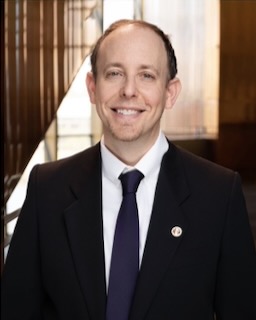
Council Member Marc Duchen
Duchen too praised City staff, “We’ve got an incredibly strong team to work through this process.” He added, “I’m learning every day.” Duchen explained his analysis that “a decade of rapid growth led to a lot of expansion in our City services, programs that may not have been needed in the past became vital priorities, and basic services also grew very quickly.”
Duchen continued, “We’re simply (now) in a different place. . . So I think the passage of the budget this year marked a moment to reset and rebuild. My sense was that Prop Q’s failure showed how concerned local residents are when it comes to how we spend here. And I believe my colleagues and I have taken a first and important step to restoring trust with those constituents.”
Duchen took care to say that Prop Q and the resulting new budget were only a “first step.” Indeed it will take considerable time to ever address and repair what has gone on at Austin City Hall since 2015.
The Opposition Isn’t Resting
Meanwhile a coalition of Prop Q opponents announced plans for a petition drive that would force a vote on a charter amendment which would require an “independent audit” of the City budget within one year after passage of the amendment, and every five years after that. They are aiming for a May 2026 election. A press release from backers of the effort included quotes from Steven Brown of Save Austin Now, former Travis County Judge Bill Aleshire, former City Council Member Ora Houston, former County Commissioner Gerald Daugherty, and former Travis County Auditor Susan Spataro. Aleshire, who the press release said helped write the charter amendment, said, “It is not enough that the Mayor and Council just try to restore trust they’ve lost from voters; the City government must be affordable, effective, and efficient.”
So, there’s a lot more to come.
For now, however, everyone involved can head into Thanksgiving knowing that the Council, however individual members may have felt about it, did respond to the mandate from voters; and it has been made clear to the Council — at least to some extent — that they must respond to a wider spectrum of voters.
* Barring something arising that we feel an obligation to cover, the Austin Independent is going to go on vacation during the holidays, through the end of the year. Thank you to all our readers for helping us to grow this year. Merry Christmas, Happy Holidays and Happy New Year.
_________________________
Folks: You won’t find local reporting like this anywhere else in Austin. Please consider subscribing and/or donating to help us keep it going. It will help us, for example, to expand our readership base and to pay for important public information requests To subscribe or donate, click here.
To receive notification when the Austin Independent posts stories, to subscribe, or to write to the editor please send us an email under Contact on the home page,or click here.
The Austin Independent, a publication of The Austin Independent, LLC
All Rights Reserved