
It’s an exciting time in Texas politics, especially for Texas Democrats who have been frozen out of power for so long. As is widely known, Texas Democrats haven’t won a statewide election since 1994 nor a US Senate seat since 1988. But right now, State Representative James Talarico is leading Republican problem child Ken Paxton in multiple polls. Meanwhile Austin State Representative Gina Hinojosa is looking really smart, in addition to brave, for jumping into the governor’s race. She is giving the three-term Governor Greg Abbott a scare as evidenced by the Governor resorting to negative campaign ads against Hinojosa. Abbott leads by 2.3 points in the Real Clear Politics average, but Hinojosa has led in two polls.
And who knows, maybe even the Austin-heavy rest of the Democratic statewide ticket has a chance, including: State Representative Vicki Goodwin for Lieutenant Governor and Austin State Senator Sarah Eckhardt for Comptroller. As Willie Nelson sings, “Miracles appear in the strangest of places.”
In any case, Democratic exuberance is rising to a fever pitch as the beginning of early voting approaches on October 19.
So, are voters in the Democratic “progressive” stronghold of Austin just as excited and tuned in to this year’s City Council races? What about the $295 million November bond election for parks and libraries? And, are folks excited about the City Charter amendments election which will determine the fate of proposed changes to the City’s foundational governing document?
Oh wait, I think I made a bad transition. I went straight from talking about the super exciting Texas senatorial and gubernatorial races to asking whether people are just as excited about the Austin City Council races, bond and City Charter elections. My editor should have caught that.
A better question would have been whether people in Austin even realize there is a City election this year.
I’m guessing that a lot of Austin Independent readers do know that there is a City election in November. But, whether you knew it or not I urge you to engage in an informal survey and politely ask your friends, family, neighbors if they realize there is a City election on the November ballot. Please email me your findings if you have time.
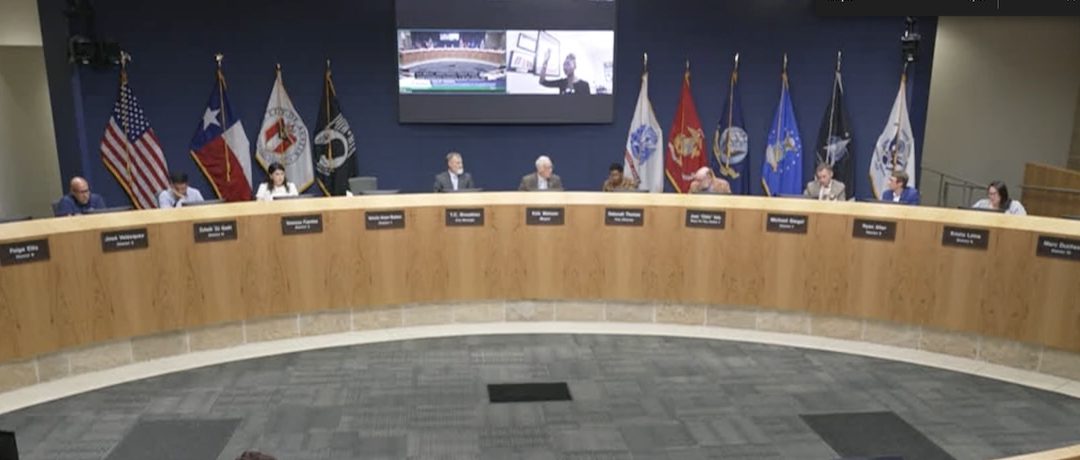
I’m making an educated guess that thousands of voters will get to the bottom of their 2026 general election ballot and realize, “Dang, there’s a whole City election down here.” They will already be in the polling booth when they have to figure it out. Or, people will realize there’s a City election, but know almost nothing about it, because coverage and public discussion of municipal issues has been drowned out by the juggernaut of the statewide elections — in addition to just a decline in media coverage of local issues over the last few decades.
One fundamental reason that voters might be unaware of the upcoming City elections is that many people pay attention to national and statewide races, but don’t pay as much attention, if any, to local governance. At the same time national, statewide and county races are in the news all year, while City elections just pop up out of nowhere late in the year. That’s because national, state and county positions are elected through the two-party system structure while local Austin elections were designed to be nonpartisan.
National, statewide and county races are in the news all year, while City elections just pop up out of nowhere late in the year.
Of course party politics are still injected into City races, now more than ever. But, City races don’t have party primaries, and there is no party affiliation listed next to a candidate’s name on the ballot. Everyone running for a particular seat on the Council competes together in one election. If no candidate gets 50% + 1 of the vote there is a runoff between the top two candidates. But, there are no primaries.
In contrast, there were Democratic and Republican primaries in March for all national (Senate only this year), state and county offices. Many of those races also had runoffs in late May — like the Republican runoff between Senator John Cornyn and his challenger, Attorney General Ken Paxton. There were also Democratic runoffs, like the local legislative race where newcomer Monserrat Garibay defeated former Council Member Kathie Tovo, in a generational battle.
So there have been two elections so far and I think most everyone who voted in those primaries, or pays much attention at all, realizes that the winners of the primaries in each party face off in the November general election. If not, there are plenty of reminders all along the way that the ultimate result of these elections will be decided in November — especially after Labor Day when those races head into their final months.
But, City elections just get slapped onto the November ballot amidst all the more publicized hoopla. That leaves people concerned with local races scrambling to get the issues and candidates noticed by voters, who are usually paying attention to other more high profile races — many of which are often reaching a frenzied conclusion.
For many years Austin, and almost all Texas cities, had local elections in May. Many still do. People who ventured beyond the City limits this past spring may have noticed campaign signs for local offices and ballot measures in Westlake, Cedar Park and other nearby jurisdictions. That’s because those local jurisdictions hold their elections in May, as did Austin until voters approved a switch to November in 2012 — along with approving changing to a single member district system for the City Council.
The core, and really only, argument for holding local elections in November is that more people turn out to vote in November than in May. That’s because more people vote in national and statewide elections than in local ones, especially for the presidential race every four years. That was the main argument advanced in 2012 when voters approved switching municipal elections to November.
A racial element is often added to this argument; that more people of color vote in November elections.
It is an unassailable fact that more people — of all races and persuasions — vote in November elections than May elections. But, if a lot of those people are unfamiliar with the local part of the ballot, then local government is going to inevitably suffer. In contrast when municipal elections were held in May there was a lot more specific focus on local issues, by both citizens and the media.
A Built-In Lack of Focus
There are some critical issues facing the City that could be getting overlooked without the sharper focus on local issues that occurs with May elections. Here’s a short list of items, just on the financial front, that need more consideration and discussion at local election time:
- Every year the Council supermajority votes for the maximum property tax increase allowed under state law. Then they complain that state law won’t let them raise property taxes even more. It’s true that the state leaves cities few tools to fund government, but at the same time, it is also true that the Austin City Council goes to the max every year.
- Despite maxing out tax sources, the Council has taken to extensive use of Certificates of Obligation (COs) to fund debt, that if funded by the traditional method of bonds would require voter approval.
- The Council routinely alters fundamental City financial policies to allow more spending, as opposed to bringing their spending within longstanding City policies, which are based on financial standards.
- The Council invariably continues to fund well connected nonprofit organizations that receive millions in funding each year, but often fail to meet performance requirements in their contracts — as City auditors recently reported.
- Adding to the dysfunction, several of the above referenced nonprofits made five-figure contributions to the ill-fated Prop Q initiative last year, supporting raising property taxes above the state limit, when their groups stood to receive some of the funds.
I’m not saying that all these problems result from having City elections in May, but I do think that is a significant factor in the decline of appropriate oversight and accountability of municipal governance. It is also a problem that could be fixed.
But, whether I like it or not, the City of Austin’s elections are in November. So, in upcoming editions, the Austin Independent will provide coverage of the bond election, the Charter Amendments election and a brief overview of the City Council elections.
In closing it seems worth pointing out that this year’s Charter Amendment election includes a proposal that would dramatically reduce the power of local citizens while increasing Council power. It concerns elections on issues put on the ballot through citizen petition drives. Currently the Council is required to put these items on the ballot of the next available state-allowed election date after the petitions are certified. Under the new Council plan, elections on such initiatives could only be held in November of even-numbered years, regardless of when they are submitted. This is obviously an attempt to reduce citizen powers and increase Council powers — put on the ballot by the Council. We covered this proposal when it was before the Council bond committee two years ago, but will go over it again before early voting starts.
_____________________________
Folks: The Austin Independent is free to everyone who wants to read it, but it still takes money to publish and to research. You will be hard pressed to find the kind of local journalism the Austin Independent provides anywhere else. So please chip in on our revamped Donate page and help us keep turning out stories. Thank you.
The Austin Independent, a publication of The Austin Independent, LLC
All Rights Reserved