
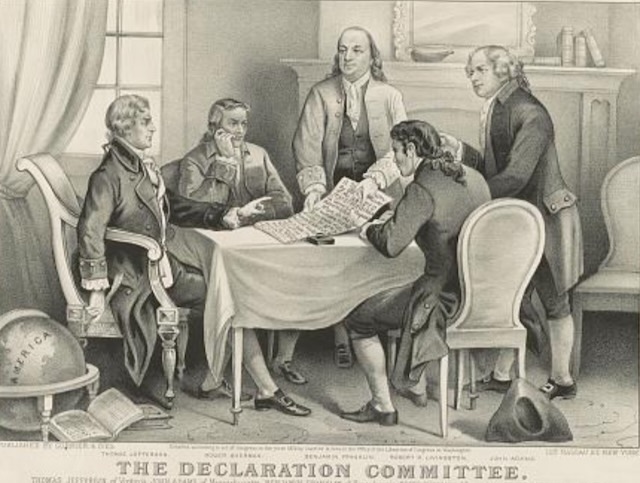
Hey everybody. We’re back from a longer than expected break; and just in time to celebrate our nation’s 250th birthday. However, I’m having difficulty finding anyone who wants to celebrate. That seems particularly true here in Austin. I know a lot of people will show up to watch the fireworks, probably including me. As far as celebrating the 250th though, I’m not sensing much enthusiasm.
I know, that’s understandable, because in a lot of ways the country is in a mess; and harshly divided. But, maybe the mess we’re in makes it more important that we celebrate, or at least examine the founding principles of the country.
As I thought it over, a great American who could provide some insight came to mind; Louis Armstrong. Armstrong’s last big hit was What A Wonderful World, released in 1967. At the time the country was very divided, in some ways as bad or worse than now. The biggest divider was the ongoing war in Vietnam which related to another division, the rebellious younger generation and what was called The Generation Gap.
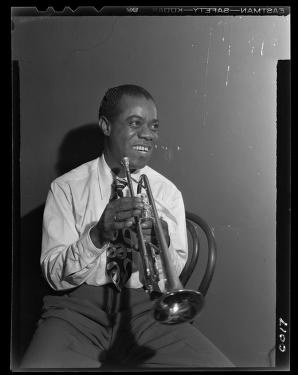
This all resulted in Armstrong getting some push back on the theme of his song. So, in 1970 he released a version which begins with Armstrong giving a spoken introduction to the song. (This can also be found on video, link later.) He says:
“Some of you young folks been saying to me, ‘Hey Pops, what you mean, what a wonderful world? How about all them wars all over the place. You call them wonderful? And how about hunger? And pollution? They ain’t so wonderful either.’
But, how about listening to old Pops for a minute. Seems to me, it ain’t the world that’s so bad, but what we are doing to it. And, all I’m saying is see what a wonderful world it would be if only we’d give it a chance.”
To me, the current situation in the country is analogous to what Armstrong was talking about then. It’s not what the Founding Fathers created and left to us that’s the problem. It’s what we’re doing with it.
The Founders made some seriously historic accomplishments. For instance they freed themselves and their countrymen from a monarchy, not exactly a small thing. Then they established, and bequeathed to us, just to name a few things:
- the peaceful transfer of power;
- freedom of speech;
- freedom of the press; and, perhaps most brilliantly of all,
- the principle of religious freedom.
And that’s just to name a few.
Yes, I know the Founders had a lot of faults and shortcomings — especially by our professed standards today. In many outposts of today’s left, including in academia, they are often dismissed as just a bunch of “dead white guys.” If you don’t believe me click here or Google “do some people refer to the founding fathers as dead white guys.” Be sure to read the Google AI summary.” (Sorry if I’m being overly sensitive; if I am it is perhaps because I know the time is getting closer when I will be one of those myself, although I don’t anticipate it becoming the case any time real soon. Don’t cut off your subscriptions.)
But the rights and principles that the Founders established have made very positive contributions to the nation and the world. I mean beforehand there had been a whole lot of difficulty, and a whole lot of spilled blood — at a whole lot of places — resulting from monarchies, the absence of peaceful transfers of power, and the denial of religious freedom. Also, freedom of speech was a pretty novel concept, and it should not be taken for granted in any age.
To me those are all fundamental freedoms that make me glad to be an American, even at our lowest points. The core of what we celebrate on July 4 however, is the signing of the Declaration of Independence. Most fundamental to that document was that it established a country based on everyone being equal.
I know that Thomas Jefferson, the man who wrote those words, was at the time holding hundreds of people in slavery on his Virginia plantation. He even brought a slave with him to Philadelphia as a personal servant. I’m guessing that at least some of Jefferson’s ideas about freedom and equality came to him while he was sitting around Monticello with slaves waiting on him inside and toiling in the fields outside. I realize too that many of the men who signed the Declaration of Independence were, like Jefferson, slaveholders.
Nonetheless, the Founders established a framework that future generation after future generation called on to expand the reach of the rights so beautifully articulated in the Declaration. Let’s look at a few of the historical figures who were very good at this.
Abraham Lincoln
Abraham Lincoln had a very expansive view of what the Founders intended with the Declaration of Independence. As Doris Kearns Goodwin explains in her classic Team of Rivals, Lincoln believed slavery was “allowed by the founders (in the Declaration) because it was already among us, but placed by them in the course of ultimate extinction.”
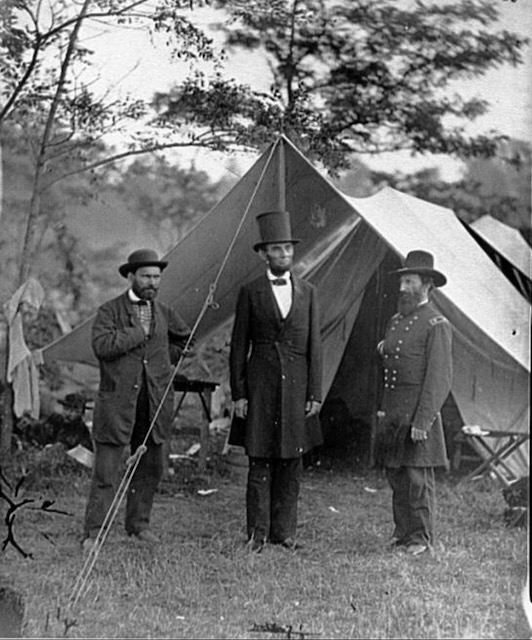
We’ll have more discussion on Lincoln and the Founders later, but here let’s just note that he continued to reference the Declaration during the Civil War. For instance he opened the 1863 Gettysburg Address by invoking it: “Four score and seven years ago our fathers brought forth on this continent, a new nation, conceived in Liberty, and dedicated to the proposition that all men are created equal. Now we are engaged in a great civil war, testing whether that nation, or any nation so conceived, and so dedicated, can long endure.” Of course Lincoln led the country to victory in the Civil War and that ultimately resulted in all slaves being freed.
FDR and the right to earn a living
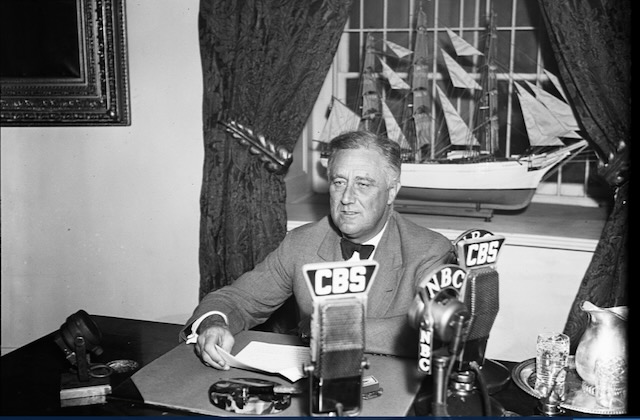
Some seven decades later Franklin Roosevelt invoked the Declaration of Independence during the darkest days of the Great Depression, to argue for the New Deal. One of the more famous examples was Roosevelt’s September 23, 1932 speech to the Commonwealth Club in San Francisco. That was during his initial campaign for the presidency. Roosevelt said, “The Declaration of Independence discusses the problem of Government in terms of a contract.” He then said that “public thinking” in the country had now evolved to include “economic power” in that contract. Thus, he concluded, “Every man has a right to life; and this means that he has also a right to make a comfortable living. He may by sloth or crime decline to exercise that right; but it may not be denied him.”
“Every man has a right to life; and this means that he has also a right to make a comfortable living. He may by sloth or crime decline to exercise that right; but it may not be denied him.”
Franklin roosevelt – 1932
The ideas Roosevelt expressed that day were the foundation of the New Deal. The programs of the New Deal were way broader than can adequately be explained here. But, among its programs were Social Security and an array of jobs programs which put Americans to work while building national treasures that the public still enjoys today; including facilities and features at multiple national parks, and also at virtually every state park in Texas.
The New Deal didn’t end the Depression, but it softened its impacts for many. Then came World War II when some 16 million Americans served in the armed forces, fighting against the Nazis and Facists in Europe and the imperial Japanese (who attacked us) in the Pacific. More than 400,000 Americans died in the war. The Nazis and Facists most definitely did not believe that “all men are created equal,” and those principles are very unlikely to have survived if the US had lost. Of course the principle that “all men are created equal” had not yet been fulfilled at home. Among other things, this was reflected in the Double V strategy advocated by many Civil Rights leaders of the time. The idea was to first defeat Nazism and Fascism abroad and then win equal rights at home.
Meanwhile, the war brought almost full employment in the US. Then, with the New Deal in place and skillful guidance by the federal government of the time, prosperity continued in the postwar years. This became the most egalitarian period in American history.
Martin Luther King and the Civil Rights Movement
Black Americans however, and Mexican Americans and other non-White Americans still did not have equal rights and suffered widespread discrimination — especially in the South. Of course the postwar years also saw the rise of the Civil Rights Movement. Its leaders often turned to the Declaration of Independence to make their case. That included Martin Luther King Jr. who made frequent references to the Declaration, including in his I Have a Dream Speech speech in August 1963, given from the steps of the Lincoln Memorial.
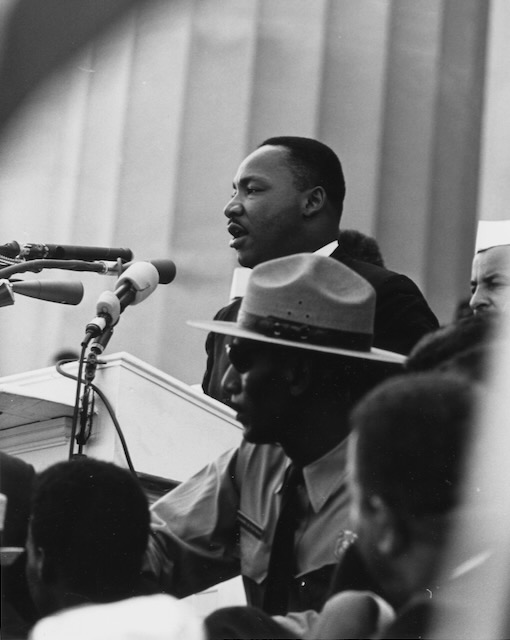
Martin Luther King speaks from the steps of the Lincoln Memorial on August 28, 1963 – Public Domain photo through Wikipedia Commons
Early in his speech King said,“When the architects of our republic wrote the magnificent words of the Constitution and the Declaration of Independence, they were signing a promissory note to which every American was to fall heir.” In the case of “citizens of color,” however, “America has defaulted on this promissory note. . . America has given the Negro people a bad check, a check which has come back marked insufficient funds.”
“But,” continued King, “we refuse to believe that the bank of justice is bankrupt.”
Later King turned to the I Have a Dream section of his speech, which he began by invoking the founding principles of the country:
“I still have a dream. It is a dream deeply rooted in the American dream. I have a dream that one day this nation will rise up and live out the true meaning of its creed: We hold these truths to be self-evident, that all men are created equal.” The famous speech then slowly built to a crescendo.
LBJ
John Kennedy was president when King made those remarks. But, he was murdered less than three months later. It was his successor, Lyndon Johnson of Texas, who pushed the historic Civil Rights Act through Congress in 1964; which, among other major advances, outlawed discrimination in public accommodations and discrimination in employment. There still remained the critical issue of voting rights. On March 7, 1965 people marching for voting rights were brutally beaten by Alabama state troopers and local police, as they tried to cross a bridge into Selma, Alabama.
Wasting no time, Johnson addressed a joint session of Congress on the matter on March 15. He urged them to pass a Voting Rights Bill. A core part of Johnson’s appeal was a reference to the Declaration of Independence: “This was the first nation in the history of the world to be founded with a purpose. The great phrases of that purpose still sound in every American heart, North and South: ‘All men are created equal’—’government by consent of the governed’—’give me liberty or give me death.’”
Johnson continued, “The history of this country in large measure is the history of expansion of that right to all of our people. Many of the issues of civil rights are very complex and most difficult. But about this there can and should be no argument: every American citizen must have an equal right to vote.
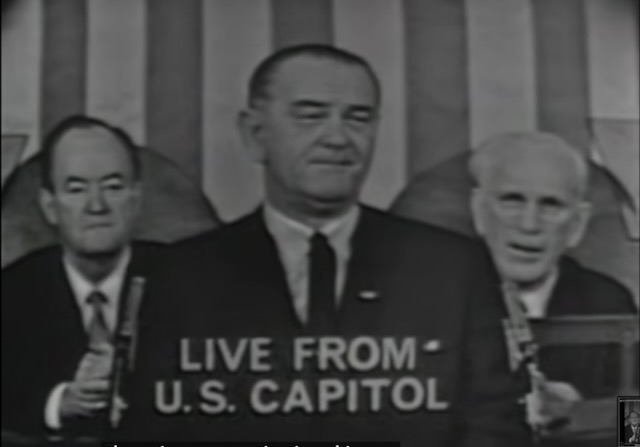
President Lyndon Johnson begins his Voting Rights Speech on March 15, 1965. LBJ Library.
There is no reason which can excuse the denial of that right. There is no duty which weighs more heavily on us than the duty we have to ensure that right. Yet the harsh fact is that in many places in this country men and women are kept from voting simply because they are Negroes.”
Johnson then explained, “Every device of which human ingenuity is capable has been used to deny this right.” Then, before representatives of many states who were still engaging in such practices, Johnson worked painstakingly through a list of clearly prejudicial and cruel methods that state and local officials had used to deny the vote to Black people.
Johnson’s audience for that speech was the members of Congress, many supportive, but others were hardened segregationists who glared at him as he spoke. Although the invocation of the Declaration was a dramatic and historic moment it was overshadowed by a later part of Johnson’s speech.
Johnson implored the Congress and the nation, in his Texas drawl, “Their cause must be our cause too. Because it’s not just Negroes, but really it’s all of us who must overcome the crippling legacy of bigotry and injustice.”
He then paused, before adding, “And we shall overcome.”
“Their cause must be our cause too. Because it’s not just Negroes, but really it’s all of us who must overcome the crippling legacy of bigotry and injustice. . . And we shall overcome.”
President Lyndon Johnson in his 1965 Voting Rights Speech To congress
With this line, the President of the United States — who then described himself as “a man whose roots go deeply into Southern soil” — had invoked the slogan, the anthem, of the Civil Rights Movement.
Multiple historians have reported that Martin Luther King, watching from his home in Atlanta, cried. Within five months Congress sent Johnson a Voting Rights Bill and he signed it into law.
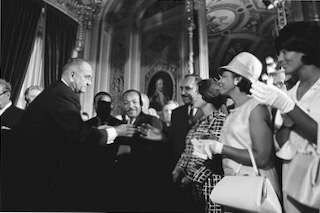
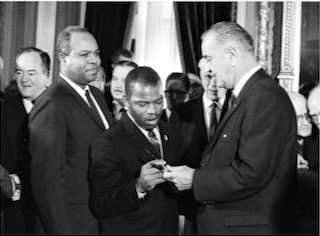
President Lyndon Johnson and Martin Luther King mingle with the crowd after LBJ signed the Voting Rights Act on August 6, 1965; left. Right, Johnson hands a pen from the signing to John Lewis who was brutally beaten at the voting rights march in Selma. Both photos are from the LBJ Library public domain. First photo by Yoichi Okamoto, second by Robert Knudsen.
Women’s Rights
Even with the Civil Rights and Voting Rights Acts in place half the population still did not have equal rights. In fact that part of the population, women, were excluded from the wording of the Declaration of Independence — unless one reads “men” as referring to all humanity. Women activists through the centuries invoked the Declaration of Independence to demand equal rights. For instance the Declaration of Sentiments passed at the 1848 American Women’s Rights Convention in Seneca Falls, New York not only played on the Declaration in its title, but also bluntly declared, “We hold these truths to be self-evident: that all men and women are created equal.” The primary author of that document was Elizabeth Cady Stanton of upstate New York.
A key demand of that conference was women’s suffrage. That didn’t happen until 1920. And, it wasn’t until the 1960s and 1970s when women, inspired by and learning from the Civil Rights Movement, broke through to equal rights, on employment for instance.
Mysticism And the Declaration of Independence
Gore Vidal (not a religious guy) once wrote in an essay that Lincoln’s stance that states were not allowed to leave the union was “mystical” — as in not really based concretely on any documents, laws or the constitution. In somewhat of a contrast, Lincoln’s stance on the Declaration of Independence is clearly based on a document, but it also has some mysticism to it. I briefly quoted Doris Kearns Goodwin earlier, but now let’s look at the broader passage from which that quote was taken, which also includes some quotes from Lincoln:
“As Lincoln repeatedly said in many forums, slavery was a violation of the Declaration’s ‘majestic interpretation of the economy of the universe,’ allowed by the founders because it was already among us, but placed by them in the course of ultimate extinction. Although unfulfilled in the present, the Declaration’s promise of equality was ‘a beacon to guide’ not only ‘the whole race of man then living’ but ‘their children and their children’s children, and the countless myriads who should inhabit the earth in other ages.’”
OK, that seems pretty mystical too. Let’s just pull Lincoln’s direct quotes out of there, with as little else as possible:
- the Declaration of Independence was a “majestic interpretation of the economy of the Universe;”
- the unfulfilled promise that “all men are created equal” was meant as “a beacon to guide;”
- and who was it to guide, “the whole race of man then living” and “their children and their children’s children, and the countless myriads who should inhabit the earth in other ages.”
The Declaration of Independence was a “majestic interpretation of the economy of the universe” intended as a “beacon to guide” not only “the whole race of man then living” but “their children and their children’s children, and the countless myriads who should inhabit the earth in other ages.”
abraham lincoln as reported by doris kearns Goodwin
That seems both mystical and perhaps a stretch on what Jefferson and the other Founders intended. But, we can’t be sure of that latter assertion.
Jefferson and the other Founders did hope that their ideas would spread to other countries. So perhaps Lincoln is right, but he just tells it in such a mystical and visionary fashion that it doesn’t seem real. On the other hand, although it’s hard to know exactly about Jefferson, it is certain that many of his fellow Founders — especially those from the South — never intended for the Declaration to apply to Black people.
And, while Lincoln is not a Founding Father, is there some mysticism involved with the Declaration of Independence, at least with the way it has been invoked to move the country forward at various times during the last 250 years?
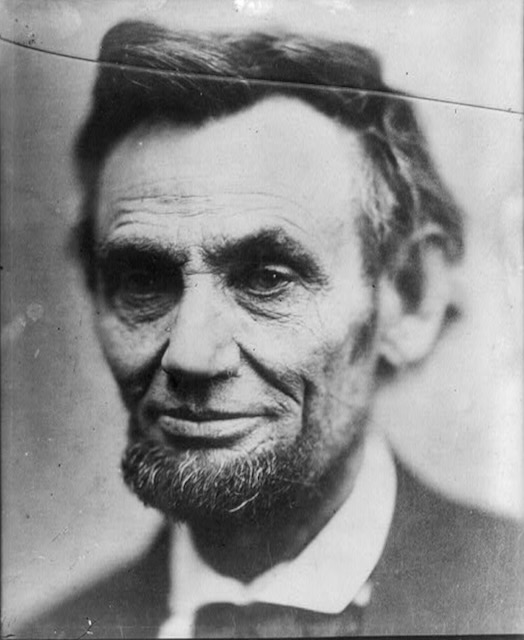
Photo of Lincoln from Library of Congress – Traditionally referred to as “the last photo of Lincoln alive”
Also, Lincoln predicted his own death. As Vidal relates, Lincoln said, “I feel a presentiment that I shall not outlast the rebellion. When it is over my work is done.” I don’t know if there is a scoring system for mysticism, but if there is I bet that accurately predicting your own death wins a lot of points.
A few days before he was murdered a jubilant Lincoln visited recently captured Richmond. Freed slaves there cheered him and followed him through the streets. He told them that they were now, “as free as I am, having the same rights of liberty, life and the pursuit of happiness.”
Can John Trudell Help Us Here?
Searching for understanding I thought of the brilliant poem put to music by John Trudell, called Baby Boom Che. Trudell was an early Baby Boomer, born February 15, 1946 and he died in December 2015. According to JohnTrudell.com he was born “in Omaha, Nebraska, and grew up on and around the nearby Santee Sioux reservation. His father was a Santee, his mother’s tribal roots were in Mexico.”
Trudell served as National Chairman of the American Indian Movement from 1973 to 1979; a period during which he said the federal government “waged war on us.” In 1979 his wife and three kids were killed in a fire, thought by many to be of suspicious origins, at their home on the Shoshone Palute reservation in Nevada. During his grieving Trudell started writing poetry. A few years later Trudell, with the help of musician friends, began putting his poems to music. He also co-founded Hempstead Project Heart with Willie Nelson; according to Trudell’s obit in the Progressive, “a group dedicated to raising awareness about the environmental, social, and health benefits of hemp through collaborations, arts and music.”
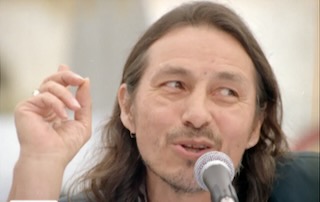
This brings us to Trudell’s part in our story, his song Baby Boom Che.
Therein Trudell talks about what Elvis Presley meant to the Baby Boomer Generation. You will have to listen to the song to get the broader idea, but Elvis is said to have led a revolution in American life, while “Never understanding what he’d done.”
But,
“Elvis, even though he didn’t know he said it
He showed it to us anyway
And even though we (Baby Boomers) didn’t know we heard it
We heard it anyway.
Men like he woke us up”
The inter-generational influence of the Declaration was probably something more like that. Jefferson may or may not have envisioned that his ideas would be applied to women.
But, Elizabeth Cady Stanton, and many others, heard it anyway.
Jefferson likely didn’t envision his words ever applying to slaves. But he showed it to us anyway.
And, Lincoln heard it anyway.
And, probably neither Jefferson or Lincoln envisioned the Declaration being applied to the right to make a living.
But, FDR and the New Dealers heard it anyway.
And Martin Luther King heard all that. And Lyndon Johnson heard it, way down in Texas.
In many ways Martin Luther King was the person most successful in carrying on Lincoln’s work; and he added a lot of his own. It brings to mind a phrase Lincoln used in his first inaugural address, “the mystic chords of memory.” Another thing that Lincoln and King share is that King also predicted his own death.
That came in a speech to allies in Memphis. King was in town to support striking sanitation workers, on April 3, 1968. This portion of the speech can be viewed here and I quote it below.
Shortly before he discussed his potential death, King told the crowd, in still another reference to the Declaration of Independence, “All we say to America is be true to what you said on paper.”
Shortly thereafter King shifted gears, telling the crowd:
“I left Atlanta this morning, and as we got on the plane, there were six of us. The pilot said over the public address system, ‘We are sorry for the delay, but we have Dr. Martin Luther King on the plane, and to be sure that all of the bags were checked and to be sure that nothing would be wrong on the plane, we had to check out everything carefully, and we’ve had the plane protected and guarded all night.’
And then I got into Memphis, and some began to say the threats, or talk about the threats that were out, of what would happen to me from some of our sick white brothers. Well, I don’t know what will happen now. We’ve got some difficult days ahead. But it really doesn’t matter with me now because I’ve been to the mountaintop.
And I don’t mind.
Like anybody, I would like to live a long life. Longevity has its place. But, I’m not concerned about that now. I just want to do God’s will. And he’s allowed me to go up to the mountain, and I’ve looked over and I’ve seen the Promised Land. I may not get there with you, but I want you to know tonight that we as a people will get to the Promised Land. So I’m happy tonight, I’m not worried about anything. I’m not fearing any man. Mine eyes have seen the glory of the coming of the Lord.”
King was shot and killed the next day as he stood on a balcony at the Lorraine Motel in Memphis.
A Few Real Accomplishments
So Lincoln, Stanton, FDR, King and Johnson are among the people who most successfully called on the founding principles to move the country forward. These folks were not just spouting off at 4th of July picnics. They invoked the Declaration of Independence and other founding principles to successfully expand those principles to more people and to more rights.
These folks were not just spouting off at 4th of July picnics.
For instance the advances on race relations and rights for people of all races since the 1960s (during my lifetime and that of many reading this story) have been truly transformational. It seems we could celebrate that for just a moment. There’s much more.
On a more everyday level, I also think it’s fantastic that in the United States a man who was head of the American Indian Movement, can write a song with such deep, yes, mystical, insights into 20th Century history and the Baby Boomer Generation. And, it’s wonderful that I can listen to that song from my computer anytime I want. And I think it’s great that he can go on to team up with Willie Nelson to raise awareness about the environmental, social, and health benefits of hemp.
The country and its citizens are way better off because of all this. So it seems like on our 250th birthday we could at least reflect on that and try to think of ways the past might help lead us out of our current morass.
The Jefferson and Adams Anniversary
And, it wouldn’t be right to discuss mysticism and the Founding Fathers without noting another anniversary that this July 4 will mark. It will be the 200th anniversary of when former presidents John Adams and Thomas Jefferson died on the same day, the 50th anniversary of July 4. The two had been close friends and allies during the Revolution and in the early years afterward. But then they bitterly parted ways and founded opposing political parties.
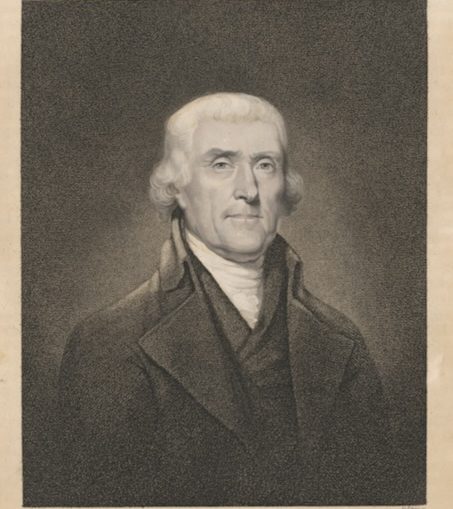
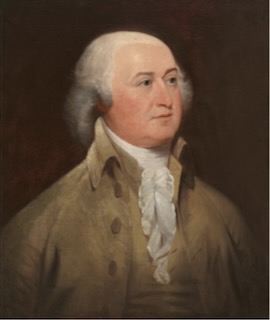
Portrait of Thomas Jefferson by David Edwin – National Portrait Gallery, John Adams, from National Portrait Gallert
Years after they both left power Adams and Jefferson reconciled. They did so through a series of letters during the last years of their lives. By the summer of 1826 they both knew the end was coming. But, they wanted to live until July 4, the 50th anniversary of the country they helped create. They both did and they also both departed that day. Jefferson went first. A few hours later Adams passed away and his last words, shortly before his death, were “Thomas Jefferson lives.” I’m not making this up. It has been reported by multiple respected historians. And, if that’s not mystical, I don’t know what is.
In closing let’s return to Louis Armstrong. Readers can decide whether his principle of “it’s not the world, it’s what we’re doing to it” applies to our current national situation. Now, if you want to let Louis close it out and lead us into the 4th, click here. [You may have to endure an ad.]
_____________________
Folks: To help us keep publishing stories like the one you just read and the upcoming ones, please consider subscribing or contributing to the Austin Independent. Local, independent journalism is very poorly funded and also badly needed. To subscribe or donate, click here.
To receive notification when the Austin Independent posts stories, to subscribe, or to write to the editor please send us an email under Contact on the home page,or click here.
The Austin Independent, a publication of The Austin Independent, LLC
All Rights Reserved