
The worst news about City elections is that they are still not over. There are runoffs for three Council races scheduled for Saturday December 12. That’s right, less than two weeks before Christmas. Early voting starts November 30, the Monday after Thanksgiving.
So, Austin voters helped elect a new Senator and new Governor and offices all down the ballot. That marked the end of campaigns that started back in the fall of 2025, some even earlier. First were the campaigns for the March Democratic and Republican primaries. The winners from those contests then faced off in months and months of campaigning, culminating in the shocking Blue Wave on election day, November 3. Since then the winners have been giving media interviews and planning what they’ll do when they take office in January. But, there is one local governmental body that is not quite done with their 2026 elections. And, yes, that is the Austin City Council.
Runoffs in December
There are three Council runoffs. These runoffs will almost certainly feature minuscule turnout. That’s because there is a huge drop off in enthusiasm after the November elections. Among other things, that decline in enthusiasm is driven by the loss of marquee candidates like James Talarico and Gina Hinojosa who get voters to the polls. Then there’s the fact that election day is less than two weeks before Christmas. In fact many people might never even realize there are Council runoffs. So, it’s going to be a tiny turnout.
To be fair, turnout in runoffs tends to be small no matter what month the runoff election is held, but less than two weeks before Christmas is a particularly inopportune time.
OK. Trigger warning. I’m about to go off on a tangent, and I might say some semi-harsh things about Travis County Democratic leaders.
I will begin by saying this about Austin City Council runoffs in December. No matter how you feel about them — love ‘em, hate ‘em, don’t care, somewhere in between — December runoffs are brought to you by the Travis County Democratic Party. That’s because Democratic officials and consultants like having local elections in November when turnout is much higher than in May (when Austin used to have its local elections and when most Texas cities still do). They frame this as a democratic (with a small d) issue, as in more voters means better democracy. But, they also know that when huge numbers of Democrats turn out that makes it easier for Democrats (capital D) to win all the local offices.
Under the City Charter, City Council races are intended to be nonpartisan. That was never, at least for the last 50 years, completely the case. But, Council elections have become much more partisan since the City switched to single member districts and also with the increasing infiltration of national issues into local elections during the Trump era. In Austin, where Democratic officials at all levels routinely endorse in Council races, this direct involvement has not been accompanied by the party’s officials assuming any responsibility for the performance or the competence of the candidates they support and help push over the finish line.
In any case, some people, like me for example, argue that lumping City elections in with November national, state and county elections causes discussion of the local races and local issues to get drowned out by all the attention going to the much higher profile state and national races. We might even say that a significant portion of the voters who show up for November elections are relatively unfamiliar with local candidates and issues, and don’t get to find out much before they vote. But, saying that is categorized as calling voters stupid and is considered elitist. (Democratic candidates are well programmed to make this argument, as Ryan Alter did at a campaign forum I attended.)
Plus, being Democrats, many backers of November City elections can’t help but also inject race into the equation. They argue that November local elections draw more voters of color. So, if you’re against having City elections in November you are elitist and might just be racist too. So then it’s conversation over.
I know some might read this and think, “I’m a Democrat, so I want all the local offices to be controlled by Democrats.” But, think about it Democrats, you have to live here too. With May elections you might risk getting an occasional Republican or independent on the Council. On the other hand, you might also get a Democrat whose interests are more aligned with what Austin needs in terms of safety and general wellness, not just with the elitist clique that picks one of their own to run — and then showers the chosen one with endorsements, social media boosts and a status as the “most progressive.”
OK, enough of that. Let’s move on to talking about the Council election results, and the upcoming December runoffs.
District 9
Well, first of all two candidates avoided a December runoff and won outright on November 3.
One of those is Zo Qadri, the only one of three incumbents to win without a runoff. He squeaked to victory with 51% to win another term representing central Austin’s District 9. It was UT students who put Qadri over the top. For instance, he carried the core West Campus precinct by 750 votes, providing the margin to win without a runoff.
Students were also central to Qadri’s victory in 2022, excited to a large extent by his campaign theme that he would be the first Muslim on the Austin City Council. Qadri likely won even more student support by passing an ordinance that prohibits developers from building windowless bedrooms, which was happening in West Campus high rises.
Qadri is best known for leading the Council in eliminating parking requirements for developers. This is consistent with the approach pioneered by former Council Member/current Congressman Greg Casar, of merging “progressive” politics and lock step voting for anything developers want. On other fronts, Qadri was widely criticized during his term for a lack of commitment to public safety, particularly by the owners of Royal Blue Grocery, a chain of small grocery stories in Austin’s core — although the Royal Blue owners were far from alone. They repeatedly expressed concern with Qadri’s lack of attention to crime problems in the downtown area and eventually closed their store in the 600 block of Congress.
Even Qadri moved out of downtown during his term in office, and landed in the Mueller neighborhood. Perhaps he was thinking, “I know this guy’s not going to do anything about crime downtown. So I’m moving.”
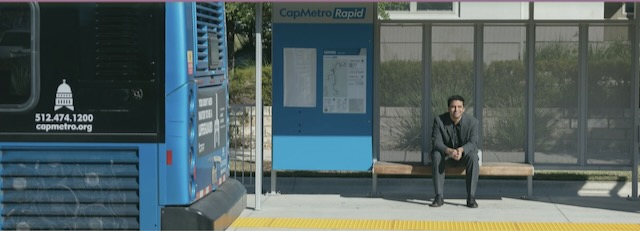
Zo Qadri posing at a bus stop in the Mueller neighborhood.
Even Zo Qadri moved out of downtown during his term in office, and landed in the Mueller neighborhood. Perhaps he was thinking, “I know this guy’s not going to do anything about crime downtown. So I’m moving.”
Finishing second was former UT professor Rich Heyman, who ran a data-driven campaign which criticized the HOME ordinance and other related development issues. He laid out data-based challenges to Qadri’s and the Council supermajority’s housing policies. As a result Heyman had the support of veteran activists from the Austin Neighborhoods Council, Community Not Commodity and others, but that wasn’t enough.
The other serious candidate was Katie Kam who ran more on controlling City spending, protecting the environment and paying more attention to public safety. A candidate who combined those two platforms might possibly have stood a better chance — but that’s far from certain.
Heyman got just short of 25% and Kam pulled 17%.
Although Qadri’s widest margins were in predominately student areas he won a large majority of precincts throughout the District. Rich Heyman won one East Austin precinct, the Clarksville-Old West Austin precinct and the small precinct just to the north. Heyman also won both Travis Heights precincts. Other than that Qadri won them all.
The truly amazing thing about Qadri’s campaign was his list of endorsements. He was one of Congressman Greg Casar’s endorsements. Casar remains heavily involved in City Council races, endorsing in four of the five races on the ballot this year. Casar also led the fight against Prop I, which would have brought in outside auditors to scrutinize the spending habits of Casar’s Council endorsees; and they may have even touched on some of the spending practices that originated during his tenure on the Council.
Congressmen Lloyd Doggett, who has traditionally not been heavily involved in local races, also endorsed Qadri, as did James Talarico. The timing was especially great with Talarico. As voters rushed to vote early for Talarico, Qadri and his volunteers handed out flyers touting the Talarico endorsement.
Gina Hinojosa also endorsed Qadri, and so did the rest of the Austin delegation to the Texas House. State Senator/now Texas Comptroller-Elect Sarah Eckhardt’s name, however, was notably absent.
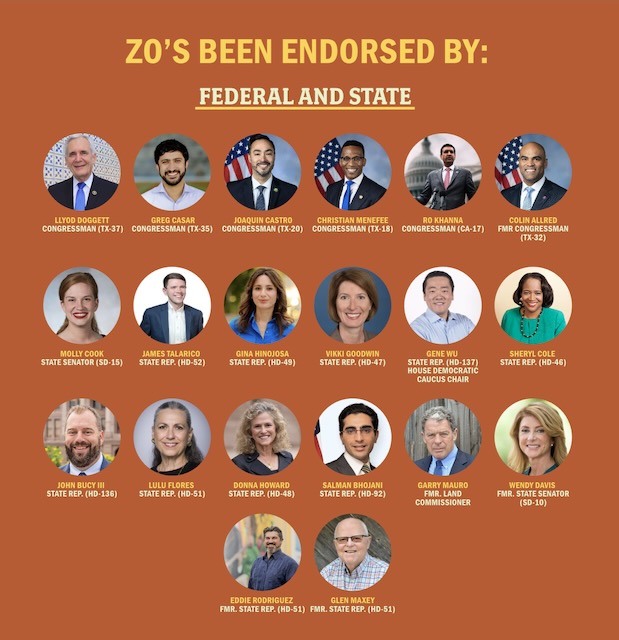
Just one page from the list of Zo Qadri’s endorsements on his website
Qadri also had the endorsement of Mayor Kirk Watson and every Council Member except Natasha Harper Madison and Marc Duchen.
There’s still more. Qadri was endorsed by a majority of the Travis County Commissioners Court: County Judge Andy Brown and Commissioners Jeff Travillion and Ann Howard. Missing from the list were Commissioners Brigid Shea and Margaret Gomez, but Qadri was endorsed by George Morales who will replace Gomez in January.
Austin’s famous District Attorney José Garza endorsed Qadri as did County Attorney Delia Garza.
Several former Council Members also weighed in with Qadri endorsements, including Ann Kitchen, Leslie Pool, Pio Renteria, Jimmy Flannigan, and Mike Martinez. Also, former Mayor/new author/possible candidate for State Senator Steve Adler was a prominently featured Qadri endorser.
From San Antonio, Congressman Joaquin Castro and former Mayor Ron Nuremberg endorsed Qadri. And even Congressman Ro Khanna weighed in from California with a Qadri endorsement!
I could go on, but there’s only so much space. Also, I’m not going to try and explain what’s going on here with all the Qadri endorsements, but I will note that every Qadri endorser that I have mentioned is a prominent Democrat to one extent or another.
District 8
Southwest Austin’s District 8 featured the other winner without a runoff, Selena Xie. Xie defeated political independent, fiscal hawk and neighborhood leader Jeffery Bowen. Xie was definitely the status quo candidate. She had the Casar endorsement and in recent years prominently supported all the Council developer-based initiatives like HOME. Xie also supported last year’s ill-fated Prop Q tax increase — which was soundly rejected by voters.
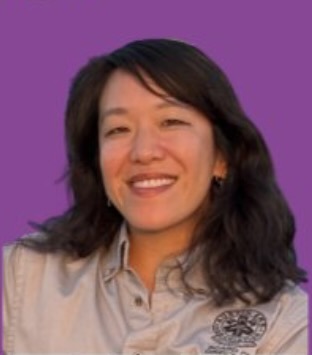
District 8 Council Member – Elect Selena Xie – from her campaign website
Although Xie checks all the boxes to become just another cog in the Casar-blessed Council supermajority, she should be given a chance before just being lumped in with the group. She ran claiming that she will be open minded and thoughtful on issues, and listen to what her constituents have to say before making decisions. Plus, she comes from a very real job, first as an EMS responder and then as an EMS Commander. She pulled 64.38% to Bowen’s 35.62%.
This would have been a three-way race, but Council Member Paige Ellis failed to gather enough signatures to get her name on the ballot to seek a third term.
The Runoffs – District 1
Now, let’s begin our coverage of the runoff races by focusing on the one open seat that does not have an incumbent, District 1 in East Austin. That’s the seat currently held by the irreplaceable Natasha Harper Madison. In the runoff newcomer to local Austin politics Amber Goodwin — until recently a Travis County Assistant District Attorney — faces off against third time candidate and East Austin activist Misael Ramos. On November 3 Goodwin led Ramos by 173 votes, 34.35% to 34.10%.
Coming in third and fourth respectively were Alexandria Anderson at 13.30% and Steven Brown at 12.05%. It was a disappointing showing for each of them, both of whom opposed the HOME ordinance and other Council initiatives that saw significant opposition in East Austin. Along with many of their East Austin neighbors, both Anderson and Brown spoke against the HOME ordinance (allowing three units to be built on almost any single family zoned lot in Austin) and similar measures, when those items were before the Council. Brown also distinguished himself from some opponents by being an open advocate for public safety (sounds odd doesn’t it that that would be unusual) and accepting the endorsement of the Austin Police Association.
Ramos too was an opponent of HOME and spoke to the Council, during one speech boring in on some Council Members individually. Gooodwin pulled in a lot of developer money for her campaign. (For a look at spending by independent Political Action Committees in the Council races, including by developer-oriented PACS, see this story by Andrew Wheat in the Austin Free Press.)
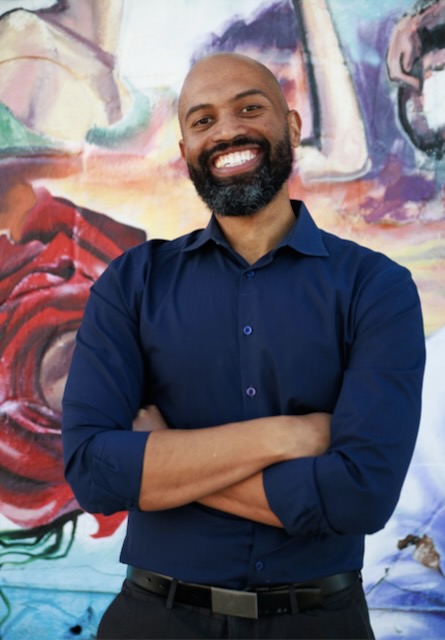
Misael Ramos – From his campaign website
Ramos’s campaign website touts him as “a proven progressive who believes that government should work for the people – not billionaires and private interests.”
The website also reports that: “Misael is President of the Rogers Washington-Holy Cross neighborhood – a historic district in East Austin founded by African American leaders, built and preserved truly affordable housing while serving as Board President of the Blackland Community Development Corporation, and led efforts securing Austin’s Anti-Displacement Community Acquisition Program to stabilize housing costs for all Austinites in our diverse neighborhoods.”
Ramos has clearly been very active in the community. His website also reports that he “led union fights as a state employee for increased wages and workplace safety. . . serves as a Board Member of Rethink35,” and “is an outspoken advocate for directing funds to additional evidence-backed solutions which have been consistently shown to improve safety.”
Recently Ramos was famously arrested by state troopers and charged, as the Statesman described it, with “participating in a riot.” Specifically mentioned was moving traffic barriers during a protest at the site where ICE shot and wounded a Venezuelan immigrant. The arrest didn’t happen at the scene, but on a Sunday morning while Ramos was walking his dog in his East Austin neighborhood.
Ramos sought to capitalize on his arrest (who can blame him), bringing it up repeatedly at subsequent campaign forums. He said that he was arrested for “speaking out,” but in reality the arrest was for allegedly moving traffic barriers, not for anything he said. Nonetheless, it does appear that the arrest has helped boost Ramos’s candidacy with District 1 voters.
Another major factor in the race is Ramos’s endorsement by the Democratic Socialists of America (or Austin) (DSA). He frequently invokes this endorsement on the campaign trail and sometimes invokes the name of fellow DSA member and endorsee, New York City Mayor Zohran Mamdani.
Goodwin also has support within the DSA, including from her, until recently, boss District Attorney José Garza. Additionally, she has the (Greg) Casar endorsement; and thus is the “progressive” status quo candidate.
Goodwin offers more of a policy agenda than some others, like José Velasquez for instance. It’s pretty vague, however, as to what she can or will actually do. For instance on “housing” Goodwin promises, “Amber will champion policies that expand and diversify Austin’s housing options, increase opportunities for homeownership, and ensure that growth complements—not compromises—the character of District 1’s neighborhoods.”
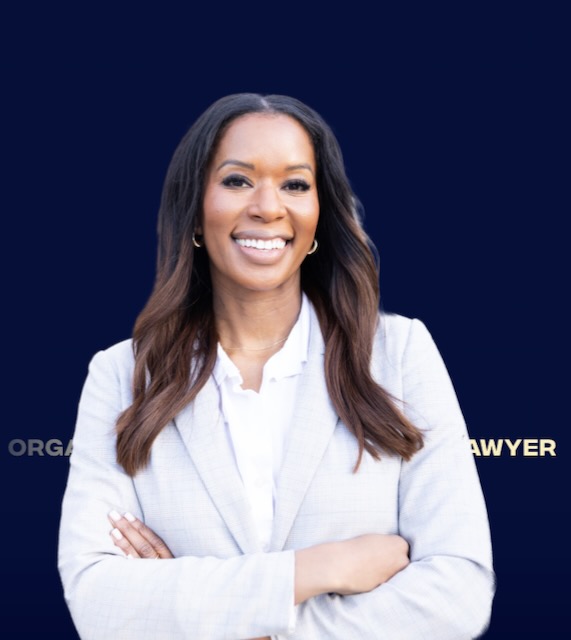
Amber Goodwin – From her campaign website
On “Business Opportunity” she vows, “Amber will expand small business loan programs and push for transparency in the city-owned land to be used for small business incubators and low-cost office space, so that the next generation of East Austin entrepreneurs has a place to start.” Perhaps Goodwin has some specific City-owned tracts in mind, but believing that the City has a lot of land lying around with no use for it is a frequent error made by rookie candidates.
The endorsement battle in this race is different than the races with incumbents, or even in District 8 where Xie had all the“progressive” establishment endorsements. Here Amber Goodwin has the “progressive” establishment and Democratic elected officials. Ramos touts that he has the endorsement of the Democratic Socialists of Austin and their national group, the Democratic Socialists of America.
As already noted, Goodwin has the coveted Greg Casar endorsement and that of her former boss/Casar ally José Garza. After that the list gets a little lighter on endorsing officials. She has State Representatives Sheryl Cole and John Bucy, but that’s it from the Austin area legislative delegation. She has the endorsements of Council Members Qadri, Velasquez, and Krista Laine, but none of the others. Travis County Judge Andy Brown endorsed Goodwin, but none of the rest of the Commissioner’s Court is listed.
This lack of elected official endorsements is not necessarily a shortcoming for Goodwin. Elections shouldn’t be just about endorsements from elected officials. We just note them here to illustrate that Goodwin appears to be what I would call the “progressive” establishment choice, but she hasn’t drawn a flood of endorsers like incumbent Qadri.
Ramos, for his part, proudly touts his DSA endorsement. He also boasts endorsements from a large number of activists, many — but not all — centered in East Austin. There are too many to list them all but they include longtime East Side activists Gilbert Rivera and Jane Haney; longtime neighborhood leader Brenda Malik; Brian Mays, of Sam’s Bar B-Q; activist and researcher Janis Bookout; Environment & Land Use Attorney Bobby Levinski; Bo McCarver, a Co-Founder of the Blackland Community Development Corporation; former Travis County Tax Assessor Collector Cecelia Burke; and Brion Oaks, original Director of the Austin Equity and Inclusion Office.
So, in essence this is a battle between left wing or “progressive” activists and the “progressive” establishment. Another factor in this race could be a similar dynamic to what has been widely reported nationally in races where DSA candidates won. It has been widely reported nationally that DSA candidates like Alexandria Ocasio Cortez, Mamdani, and Darializa Ávila Chevalier get their winning margins from heavily gentrified neighborhoods as opposed to areas which largely remain traditional ethnic enclaves. District 1 is a heavily gentrified District and this dynamic could be at work here, especially given that one of two candidates is endorsed by the DSA and another is supported by key DSA figures.
(A group of East Austin neighborhood leaders from the African American Cultural Heritage District is holding a forum featuring the two District 1 candidates on Saturday November 21 at 1 pm at the “Yellow Jacket Conference Center, 900 Thompson Street, Eastside ECHS at L. C. Anderson Campus.”)
District 3
In District 3 incumbent José Velasquez pulled 47.37% of the vote and faces political newcomer Neha Shah in a runoff. Shah pulled 24.73%. That means Velasquez got almost double the votes Shah did, but not enough to avoid a runoff.
With such a big lead it looks like Velasquez should win easily, but that should not be assumed. The electorate will be different in a runoff.
The biggest policy difference between Velasquez and Shah is over their approaches to development issues. Velasquez has been a lockstep vote for developers, except in a few controversial cases that came up as the election approached. He clearly didn’t do anything to try and stop the developments in question. He just announced that he was voting no, transparently getting marked no so he could say he voted no if it came up during his reelection battle. So in this way Velasquez can be described as practicing transparency.
In contrast Shah, an immigrant originally from India, says on her campaign website, “There should be no more density bonuses without guaranteed below-market units, and no more displacement of East Austin residents in exchange for speculative market-rate development.”
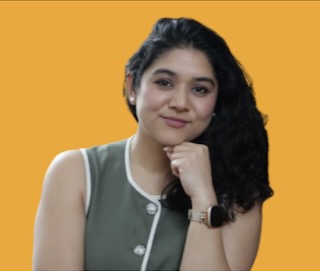
District 3 candidate Neha Shah
Shah is also critical of Council spending. Her website speaks to that: “Property taxes have gone up 100% in ten years — this is unsustainable. Billion-dollar projects must answer to taxpayers, not done in secret votes, rushed deals, and NDA’s. Neha will demand a clear overview of city spending, and prioritize City Commission and citizen engagement.”
Shah in fact lays out a pretty thoughtful and thorough program on her website.
In contrast Velasquez’s website, and campaign, relies heavily on endorsements. His campaign website does not list a single accomplishment during his time in office. Instead the website concentrates vaguely on representation, “When I first stepped into this role, I made a commitment to redefine what active representation looks like. For too long, City Hall felt distant, inaccessible, and unwelcoming to the very people it serves. We set out to change that ….intentionally, consistently, and with the community at the center of every decision. That meant showing up differently. Not just at meetings…but on your blocks, in your schools, and at your kitchens and coffee tables.”
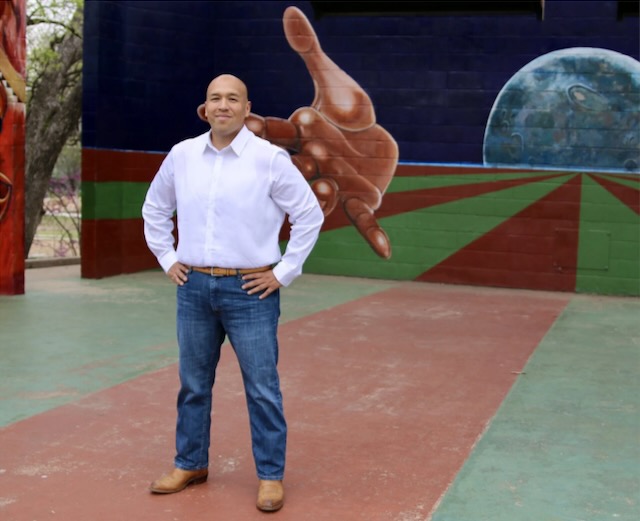
On Velasquez’s campaign website he posts the above verbiage with a photo of him posing in front of an East Austin mural of a disembodied arm and hand, as if the hand is presenting him to all of us, East Austin in particular (screenshot at top of story).
This type of statement is something of a genre among Council Members in the 10-1 system, particularly those representing predominately minority precincts. They stress their districts being neglected by City Hall (or in Velasquez’s case how far away and inaccessible it felt), ignoring all the Council Members who came before them. It’s like Johnny Trevino, Gus Garcia, Raul Alvarez and Pio Renteria never existed — or at least never made their offices accessible to community members, like Velasquez says he has.
Velasquez does seem to revel in some of the community engagement aspects of his job, like attending public events, visiting with people and posing for photos.
As to endorsements, Velasquez is endorsed by Congressman Greg Casar, Mayor Kirk Watson, all his Council colleagues except Marc Duchen, and state representatives Sheryl Cole, Donna Howard, Lulu Flores, and State Representative-Elect Montserrat Garibay. He is also endorsed by James Talarico, and — in something of a novelty — is endorsed by Talarico’s Democratic primary opponent Congresswoman Jasmine Crockett. Velasquez also touts endorsements from District Attorney Jose Garza, County Attorney Delia Garza and San Antonio Congressman Joaquin Castro.
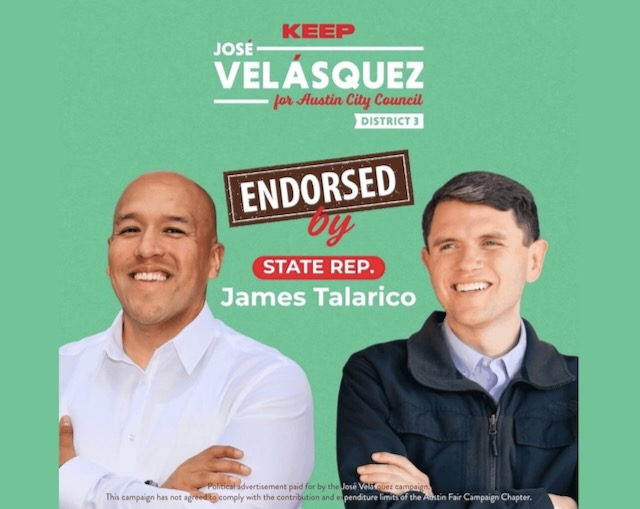
One of José Garza’s endorsements – from his Facebook page
District 5
The second incumbent facing a runoff is Ryan Alter, who polled 47.77% to opponent David Weinberg’s 26.18%, a similar margin as between Velasquez and Shah.
Weinberg’s presence in the runoff is no surprise because he was the only one of Alter’s three opponents who routinely showed up at candidate forums. Nonetheless, the other two candidates — Liz Brink and Farrah Abraham — pulled 26% between them, the same percentage that Weinberg got. So those votes will be important to try and get, but turning them out will be difficult.
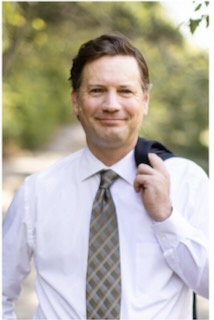
David Weinberg – from his campaign website
At campaign forums, Weinberg routinely took it to Alter, challenging the incumbent’s spending habits and his lock step voting for development projects. Weinberg says that he himself is neither “YIMBY or NIMBY” and, as stated on his website, believes in “balancing the need for more housing with respect for existing neighborhoods and ensuring that residents have meaningful input into how their communities evolve.”
Weinberg also expresses support for public safety, (as already noted) an issue that few Council Members or candidates address.
Alter claims a number of accomplishments on his website, like “Over 1,000 affordable housing units built in District 5.” But, some of his claims are questionable or only state part of the equation. For instance under the category “Real Homeless Solutions” Alter maintains “First multi-year decline in the number people entering homelessness.” That may have happened and would be a good thing. But, this ignores that the number of homeless people in Austin has increased every year, something that the City department also ignores or refuses to acknowledge.

As many likely remember, Alter, the Council’s only Harvard graduate, was exposed last year for several ethical misdeeds. An amazing factor in the race is that voters don’t seem to care about — or maybe don’t know about — Alter’s ethics problems. Perhaps it has to do with the modern decline in people who read newspapers, or newspaper websites. It was the Austin American-Statesman which last year revealed that Alter was practicing a fairly novel concept wherein if he was working on City business while eating lunch then the City had to pay for it. He charged 70 meals totaling $1,200 to City taxpayers. Alter initially explained to the Statesman, “If I need to grab a lunch or grab a breakfast taco, but I can keep doing my work here, that’s what I do.” Of course that statement leaves out that the City paid for the breakfast tacos and the lunches.
It was the Austin American-Statesman which last year revealed that Alter was practicing a fairly novel concept wherein if he was working on City business while eating lunch then the City had to pay for it.
Alter eventually paid the City back, but only after more revelations. For instance the Statesman also reported that Alter had given money from his office budget to a series of local activist groups, including the Liberal Austin Democrats.
Then, shortly before election day 2026 Alter sent out a campaign style email from his City office account. Therein he touted his accomplishments while in office and linked to a social media account that included campaign material.
That’s it. For those in Districts 1, 3, and 5, be sure to leave time for voting in between working, shopping and holiday parties.
____________________
Folks: The Austin Independent is free to everyone who wants to read it, but it still takes money to publish and to research. You will be very hard pressed to find the kind of local journalism that the Austin Independent provides anywhere else. So please chip in on our Donate page and help us keep turning out stories.
If you happen to have difficulty on the Donate page please contact us here. Thank you.
The Austin Independent, a publication of The Austin Independent, LLC
All Rights Reserved